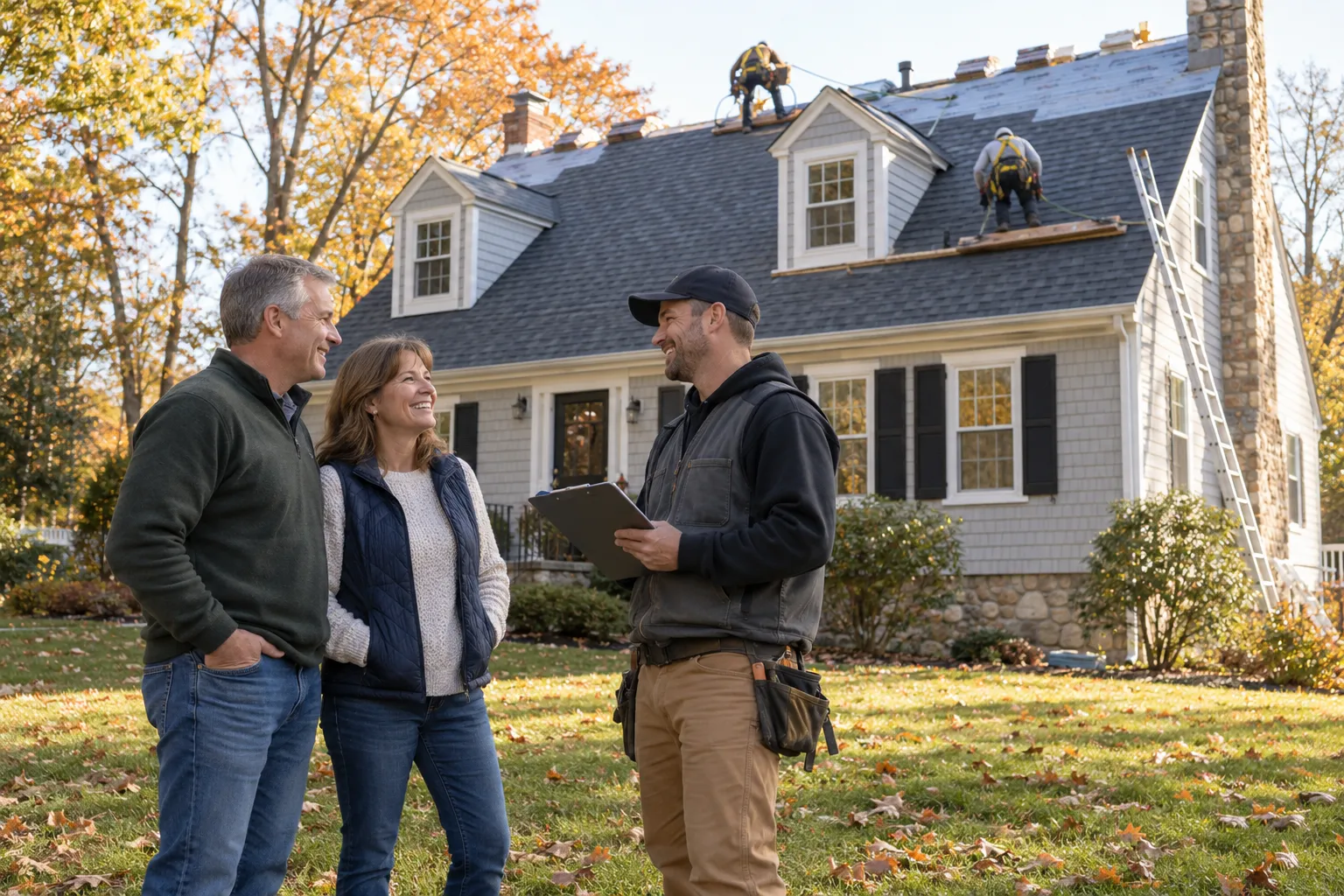
A roof replacement is a big decision, and it helps to understand it before anyone knocks on your door. A new roof means the old layers come off, the wood underneath gets checked, and a fresh, watertight cover goes on. It is usually planned work, not a rush job, unless a leak forces the issue first. In Marlborough, snow, ice and spring melt put steady strain on roofs, so age and condition matter a great deal.
Crackpenalty Roofing is a referral service. It links homeowners with independent local roofing contractors who give written estimates. The providers do the work, and you stay in charge of the choice. Use this page to learn the warning signs, the usual steps and the questions worth asking. Then compare your options in plain words, with no pressure.
Is it time to replace, or just look closer?
A roof is a coat. A small tear in a sleeve can be stitched, but when the whole fabric has gone thin, stitching only buys a little time. Replacement makes sense when the trouble is the roof's age and overall condition, not one lonely spot.
Signs the coat is wearing thin
Look for patterns rather than single flaws:
- Shingles that curl, crack or have gone missing in several areas
- Dark grit from the shingles collecting in gutters
- Stains, damp spots or daylight showing in the attic
- A sagging ridge, or soft, bouncy areas underfoot
- Asphalt shingles near or past roughly 20 years old
One sign may only mean a repair. Several together usually point toward a new roof.
When a leak cannot wait
If water is coming in right now, protect the room first. Move belongings, set out a bucket and take photos. Then ask providers about emergency roof repair to close the opening. Replacement can be planned once the house is dry. Request a callback to check provider availability.
Why snow, ice and old houses are hard on roofs
Water in a crack works like a crowbar. It slips in as liquid, turns to ice, and pries the gap a little wider. Cold snowy winters, repeated ice and thaw cycles, spring snowmelt and coastal storms give that crowbar plenty of practice.
Older homes add their own twists. Cape Cod rooflines, multi-family buildings and aging decking may need extra care, so ask each provider what they found under the old layer.
What a full replacement includes
A proper job is more than new shingles on top. Ask that the written quote lists each of these:
- Removal of the old roofing and disposal
- Inspection of the wood deck, with any repairs priced
- Ice and water barrier along the eaves and valleys
- Underlayment, flashing and drip edge
- The new roofing material
- Ventilation and ridge details
- Cleanup, including a magnet sweep for loose nails
Tear-off or roof-over?
A roof-over is like painting over peeling paint. It looks fine for a while, but the trouble stays underneath. A tear-off strips the roof down to the deck, so the provider can see rot or damp wood. It costs more up front, and many local rules limit how many layers a roof may carry.
Choosing a roofing material
Picking a material is like picking shoes. Sneakers suit a short walk, and hiking boots suit a long, rough trail. Asphalt shingles are common and fit most budgets. Metal sheds snow well and lasts a long time. Heavier options may need the framing checked, which matters on older houses.
Ask each provider to explain the trade-offs in plain words.
Request Service
Permits, timing and weather
Most towns want a permit for a full replacement. Many providers handle the paperwork, but ask who does. Shingle adhesive needs mild weather to seal, so spring and fall are popular. Winter work is possible but may be slower. Allow a few days for the work itself, and more for scheduling.
Warranties, in plain words
There are usually two. The manufacturer stands behind the materials. The provider may stand behind their workmanship. Read how long each lasts, what voids it, and whether it passes to the next owner. A warranty that transfers is a quiet selling point at resale.
How a new roof protects your home's value
Buyers and inspectors look at the roof early. A recent, well-documented replacement removes a big question mark. Keep the contract, the material details and the warranty papers in one folder so they can go with the house.
Hail and storm damage
If hail or a coastal storm hit the roof, hail damage roof replacement may be worth weighing when the harm is widespread. Some policies may cover sudden damage, so check your policy. Providers can often help document damage for a claim. Smaller storm damage repair has its own page.
Comparing estimates side by side
Get two or three written quotes from local roofing contractors. Make sure each describes the same scope, or the numbers mean little. It is like comparing two grocery bills when one has half the items. Check the material brand, how many layers come off, deck repair terms and cleanup.
Questions to ask before you hire
- Are you licensed and insured in my state, and can I see proof?
- Who pulls the permit?
- What happens if the deck is rotten once the old roof is off?
- Which warranties come with the job?
- Who will be on site, and how long will it take?
Warning signs to walk away from
Be careful with anyone who pushes you to sign today, asks for most of the money upfront, or will not put the scope in writing. A solid provider can answer questions calmly.
Deciding without pressure
Compare, then decide. Crackpenalty Roofing is a referral service, so independent providers do the work and you make the choice. Prefer to talk it through first? Request a callback to ask about providers in your area.
Request Service
What's Included
Old Roof Removal
Worn shingles and underlayment come off and get hauled away, so the deck can be seen.
Deck Check
The wood beneath is inspected for rot or damp spots, with any repairs listed in writing.
Weather Barriers
Ice barrier, underlayment and flashing guard the eaves, valleys and chimneys where water likes to sneak in.
New Roof Surface
Your chosen material goes on, followed by ventilation, ridge details and a careful cleanup of nails.
What a new roof may cost
Prices vary a lot by roof size, pitch, material and local labor. These are typical U.S. ranges only. Always ask each provider for a written quote that spells out the full scope.
| Item | Typical range | Notes |
|---|
| Asphalt shingle roof, average home | $7,000 – $15,000 | Most common choice; size and pitch change the total |
| Metal roof, average home | $12,000 – $30,000 | Higher up front; sheds snow well |
| Tear-off and disposal | $1,000 – $3,500 | Depends on layers and roof size |
| Deck repair or replacement | $2 – $7 per sq ft | Only where wood is damaged |
| Ice barrier and underlayment | $500 – $2,000 | More needed on cold-climate roofs |
| Permit and inspection fees | $50 – $500 | Set by the town; ask who pays and files |
Request Service
How It Works
Share your roof details
Tell us about your home, roof age and any trouble you have noticed.
Get matched with providers
A local provider may reach out to look over the roof and discuss options.
Compare written estimates
Line up scope, materials, warranties and timing from each quote, side by side.
Choose when you are ready
Pick the provider you trust, or pass on all of them. It is your call.
Why Call Crackpenalty Roofing
Compare before you commit
Seeing several written estimates side by side helps you spot gaps in scope before you sign.
Plain explanations
Each option is explained in everyday words, so quotes stop feeling like a foreign language.
Independent local providers
Roofing contractors in the network are separate businesses, and the final choice stays with you.
No obligation
Asking for an estimate does not lock you in, so you can take your time.
Other Services