How do I know if hail damaged my roof?
Look for dented gutters, dark soft spots, cracked shingles and loose granules in the downspouts. Hail marks are often hard to see from the ground, so a provider's inspection is the reliable way to confirm.
Request an estimate, no obligation
Crackpenalty Roofing is a referral service. We do not climb roofs or do the work. We connect homeowners in Marlborough with independent local roofing contractors who inspect storm and hail damage and explain what they find in plain words.
Think of your roof as a coat. A coat can take a rough night and still look fine, but a small tear lets cold rain in. Wind, hail and heavy ice can do the same to shingles. A provider can tell you whether you have a small fix or need hail damage roof replacement. You compare the estimates, ask your questions, and decide at your own pace.
There is no obligation when you request an estimate. Providers in our network can often help document damage with photos and notes, which may be useful if you file a claim. Check your policy, since some policies may cover sudden storm damage.
Before anything else, stay off the roof. Wet shingles are like a freshly mopped floor, and a fall is a far bigger problem than a missing tile. Look from the ground instead. Walk around the house and check for shingles in the yard, dented gutters, or branches resting on the roof.
Inside, look at the ceilings and attic. A brown stain, a sagging patch or a drip means water is getting in. Stay clear of downed power lines and anything that looks unstable.
If water is coming in, a temporary cover is the first step. Many providers can respond quickly with a tarp or board-up to hold things steady. Request a callback to check provider availability in your area.
Think of a tarp as a bandage. It protects the spot while you decide on the real fix. It is not a final answer, so do not feel rushed into a big job just because a tarp went up.
Water is patient. A tiny gap lets in a little moisture at a time, and over weeks that moisture soaks insulation, stains ceilings and softens the wood under the shingles. In cold climates, the water then freezes and thaws again and again, which pushes the gap wider, much like a pothole growing each winter.
Acting early keeps a small problem small. It also leaves a clear record of when the damage happened.
Storms hurt roofs in different ways. Hail bruises and cracks shingles and knocks off the protective granules. High wind lifts and creases shingle edges or tears them away. Falling limbs can punch through the surface. Coastal storms can drive rain sideways under flashing and into joints.
Hail is the sneakiest. Damage often shows as soft, dark spots that are hard to see from the ground. Think of a bruised apple: the skin looks fine, but the flesh underneath is hurt.
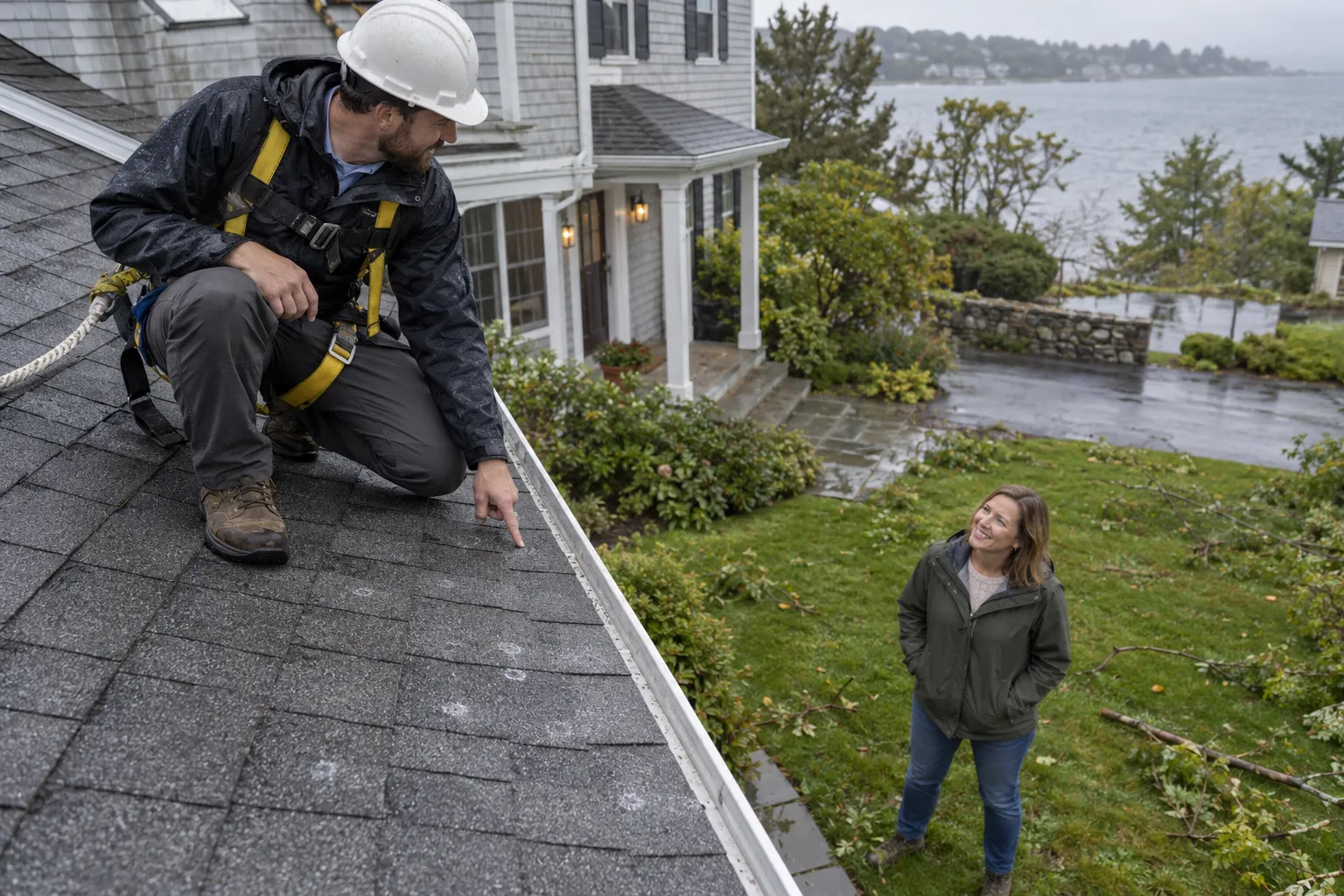
A good provider looks at more than the shingles. They check the flashing around chimneys and vents, the gutters and downspouts, the ridge line, and the soft metal that often shows hail dents first. They may also look in the attic for damp wood or daylight where it should not be.
Ask for photos and a written list of what they found. Older homes and Cape Cod style roofs with steep pitches and dormers have more places for water to hide, so a careful look matters.
This is the question most homeowners ask. Picture a sweater. One snag is easy to mend, but if the whole sleeve is worn thin, patching it only buys a little time.
A few damaged shingles on a roof that is otherwise healthy usually point to a repair. Widespread hail bruising, many lifted shingles, or an aging roof that already had little life left may point toward replacement. A provider should show you the evidence and explain why.
Hail damage roof replacement is worth a serious look when impact marks are spread across several slopes, when granules are piling up in the gutters, or when the roof was already near the end of its life. Fixing scattered spots on a tired roof can cost nearly as much over time as starting fresh.
Compare, then decide. Get two or three written estimates and see whether the providers agree on the scope.
Some policies may cover sudden storm damage, but coverage varies, so check your policy and talk to your insurer. Providers can often help document damage with photos and notes for a claim. They cannot promise what an insurer will decide.
Take your own photos too, and keep receipts for any temporary protection. Know your deductible before you choose a plan.
After a big storm, strangers may knock and say they spotted damage on your roof. Some are honest. Some are just chasing storm work and will be gone by next season. Treat the visit like a cold call: friendly, but no decisions on the porch.
Be wary of anyone who asks for full payment up front, urges you to sign on the spot, or offers to handle your claim for you. Real local roofing contractors will give you time.
Line up the estimates like menus from three restaurants. Look at what is included, not only the total. Check the shingle type, whether the old layers come off, what happens to rotted decking, and how flashing and ventilation are handled.
A much lower price often means something was left out. A much higher one should come with a clear reason.
A roof that was properly assessed and properly finished protects the framing, the insulation and the rooms below it. It also helps when you sell. Buyers and inspectors look at roof age and repair history closely. Clear records of storm work, with dates and photos, make that conversation easier.
You do not have to rush. Take the time to compare, and choose the plan that fits your house.
A provider checks shingles, flashing, gutters and the attic, then explains what the storm actually did.
Providers look for bruises, cracks and lost granules that are hard to see.
Lifted, creased or missing shingles are noted slope by slope in a written report.
You get a plain-language view of whether a repair is enough or replacement makes sense.
These are typical U.S. ranges and they vary a lot by roof size, pitch, materials and local pricing. Treat them as a starting point and always ask for a written quote.
| Item | Typical range | Notes |
|---|---|---|
| Storm damage inspection | $150 – $500 | Some providers fold it into an estimate |
| Temporary tarp or board-up | $300 – $1,500 | Holds things steady until the real fix |
| Minor shingle and flashing repair | $300 – $1,500 | A good fit for small, scattered damage |
| Replacing damaged decking | $70 – $150 per sheet | Depends on how much wood is rotted |
| Partial roof replacement | $2,000 – $6,000 | One or two slopes; shingle matching varies |
| Full asphalt shingle replacement | $8,000 – $20,000 | Larger or steeper roofs cost more |
Send a short request describing the storm, any leaks, and what you have noticed so far.
We connect you with independent providers in the network who handle storm and hail damage.
Review findings, photos and prices side by side and ask every question you have.
Choose a provider, or none at all. There is no obligation to move forward.
See several local providers' findings and estimates side by side, with no pressure to pick one.
Roofing terms get explained simply, so you understand what each estimate actually includes.
Local roofing contractors do the work. We simply make the introduction, and you decide.
Careful assessment and documented work help protect your house and its resale value.
Ask for an estimate and a local provider from our network will follow up. Prefer to talk? Use the details below and ask about provider availability.
Look for dented gutters, dark soft spots, cracked shingles and loose granules in the downspouts. Hail marks are often hard to see from the ground, so a provider's inspection is the reliable way to confirm.
It depends on how widespread the damage is and how old the roof is. A few damaged shingles often suit a repair. Broad hail bruising or an aging roof may call for replacement.
Some policies may cover sudden storm damage, but terms and deductibles vary. Check your policy and talk with your insurer. Providers can often help document the damage with photos for a claim.
Ask for an estimate and a local provider from our network will follow up. Prefer to talk? Use the details below and ask about provider availability.
No obligation